


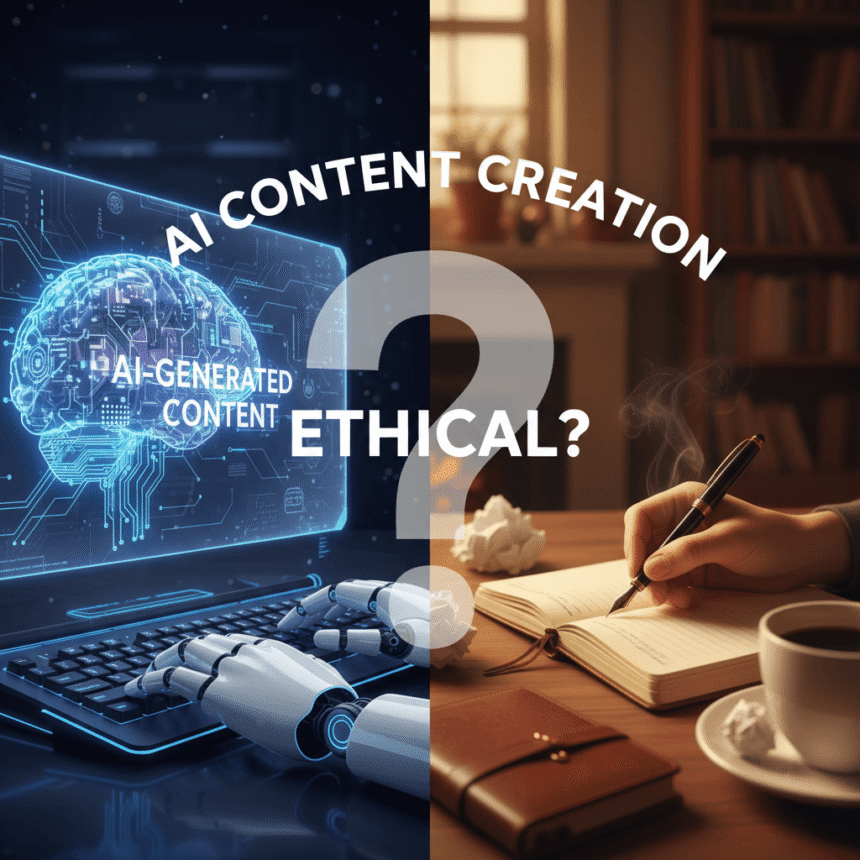
The rise of Artificial Intelligence has changed how we live and work. One of the most debated topics today is the use of AI to create content like articles, images, and videos. While it is an incredibly powerful tool, it raises a lot of questions about right and wrong.
Is it fair to use a machine to do the work of a human? Is AI-generated work truly original? To answer these questions, we need to look at the different sides of the debate.
The Question of Ownership and Data
The first ethical concern involves how AI models are trained. These programs do not create ideas out of thin air. They learn by analyzing millions of existing works created by humans, such as books, paintings, and articles.
Many artists and writers feel that their work has been used without their permission to teach the AI. This creates a moral dilemma. If an AI creates a beautiful image based on the styles of thousands of human artists, who deserves the credit? Some argue that this is a form of digital theft, while others believe it is no different from a human student learning by studying the masters.
Accuracy and the Truth
Another major concern is the spread of misinformation. AI models are designed to predict the next word in a sentence or the next pixel in a picture. They do not actually “know” facts. Sometimes, AI can confidently state something that is completely false. This is often called a hallucination.
From an ethical standpoint, creators have a responsibility to provide truthful information. If a blogger uses AI to write a health guide or a news report without checking the facts, they could unintentionally harm their readers. Using AI ethically requires a human to verify every claim.
The Impact on Human Jobs
Many people worry that AI will replace human writers and designers. This leads to a discussion about economic ethics. Companies might choose to use AI because it is faster and cheaper than hiring a person.
However, many experts believe that AI should be used as a partner rather than a replacement. An ethical approach involves using AI to handle repetitive tasks, allowing humans to focus on high-level creativity and personal storytelling. Authenticity is something a machine cannot truly replicate. A human’s personal experiences, emotions, and unique perspective are what make content resonate with others.
Transparency with Your Audience
The most important part of ethical AI use is honesty. If you use AI to help you write a blog post or create an image, should you tell your readers?
Most people agree that transparency is key. Readers value trust. If a reader finds out that a piece of advice they found moving was actually written by a machine without any human oversight, they might feel cheated. Being open about using AI as a tool helps maintain that bond of trust.
Finding the Balance
AI content creation is not inherently “bad.” It can be a wonderful tool for brainstorming, organizing thoughts, or overcoming writer’s block. It becomes an ethical issue only when it is used to deceive, steal, or spread lies.
To use AI ethically, you should:
- Always check the facts for accuracy.
- Add your own unique voice and personal stories.
- Respect the intellectual property of others.
- Be honest with your audience about your process.
By following these simple steps, you can use modern technology while still being a responsible and helpful creator. AI is a tool, and like any tool, its value depends on the hands that use it.