


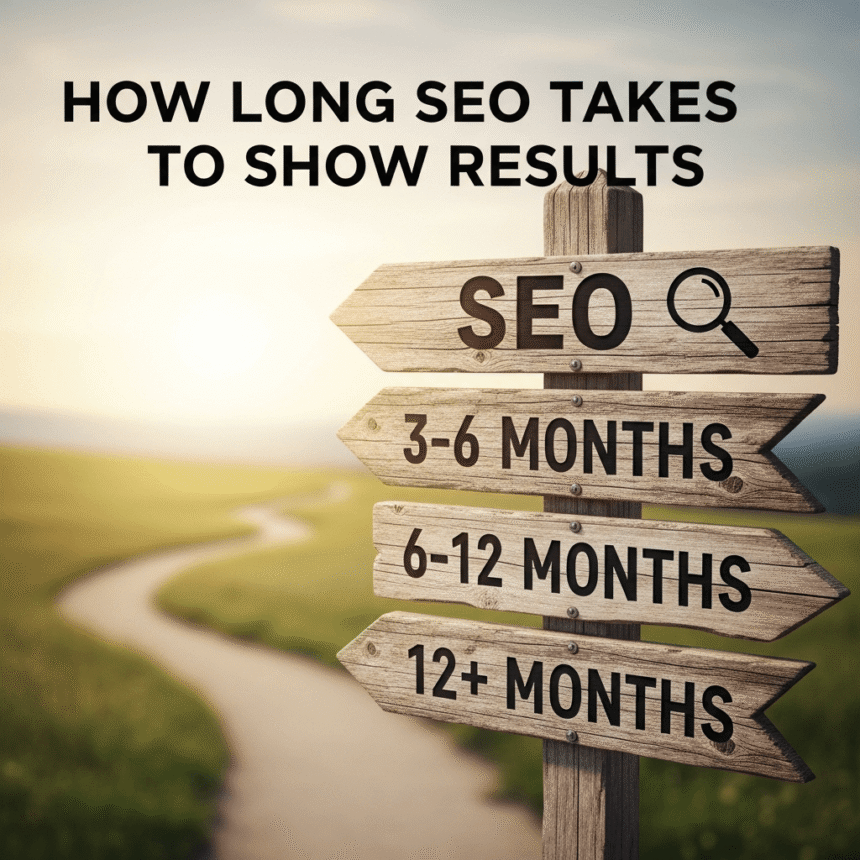
If you are starting a new website or improving an old one, you probably want to know when you will see more visitors. The simple answer is that SEO is not a “fast” fix. It is a long-term strategy. For most websites in 2026, it takes 3 to 6 months to see early signs of progress and 6 to 12 months to see significant growth.
Here is a guide to help you understand why it takes time and what you can expect along the way.
The Typical SEO Timeline
Search engines like Google need time to find your pages, understand your content, and decide if they can trust you. Here is what a normal timeline looks like:
- Months 1 to 2: The FoundationDuring this time, you focus on technical health. This includes making your site fast, fixing broken links, and ensuring it works well on mobile phones. You won’t see much traffic yet, but you are building the “ground” for your site to stand on.
- Months 3 to 4: Early SignalsYou will start seeing your pages show up in search results, even if they are not on the first page yet. You might notice a small increase in “impressions” (how many people saw your link) in your tracking tools.
- Months 5 to 6: Noticeable GrowthBy now, Google has seen that you are consistent. Some of your easier keywords might hit the first page. You should see a steady rise in the number of people clicking on your site.
- Month 12 and Beyond: Compounding ResultsSEO is like a snowball. Once it starts rolling, it gets bigger faster. After a year of consistent work, your site gains “authority,” making it much easier to rank for new topics.
Why Does It Take So Long?
There are three main reasons why results don’t happen overnight:
1. Trust and Authority
Google wants to show its users the best and most reliable information. If your site is new, Google doesn’t know you yet. You have to prove over several months that you provide helpful, accurate content.
2. Competition
If you are writing about a popular topic, you are competing with sites that have been around for ten years. It takes time to move past those established players.
3. The “Crawl” Process
Search engines use “bots” to read the entire internet. With billions of pages to look at, it can take days or weeks for a bot to visit your site, see your updates, and update the search rankings.
Factors That Speed Up (or Slow Down) Results
Not every site follows the same path. Some things can change your speed:
- Website Age: Older sites with a good reputation usually see results faster than brand-new domains.
- Content Quality: In 2026, “simple” content isn’t enough. Google looks for “E-E-A-T” (Experience, Expertise, Authoritativeness, and Trust). If you write from personal experience, you will likely rank faster.
- Technical Health: A slow site is a huge roadblock. If your pages take more than 2 or 3 seconds to load, Google may hold you back.
- Keyword Difficulty: It is much faster to rank for a specific phrase like “best blue running shoes for flat feet” than a broad word like “shoes.”
How to Know if Your SEO is Working
Since you won’t see a huge jump in sales in the first month, look for these “early wins” instead:
- More Pages Indexed: Check if more of your pages are appearing in search results.
- Rising Impressions: Even if people aren’t clicking yet, seeing your “impressions” go up means you are moving in the right direction.
- Higher Rankings: Use tools to see if a page moved from position 80 to position 30. That is progress!
Final Thoughts
SEO is a marathon, not a sprint. The best thing you can do is stay consistent. If you keep publishing helpful content and fixing technical errors, the visitors will come. The waiting period is simply part of the process.